Showing posts with label electromechanical. Show all posts

October 14, 2011

Bipolar Stepper Motor

12V Bipolar (Sparkfun)
Torque: 2.3 kg*cm 
Angle: 1.8°±5% (200 Steps/Revolution)
AC, BD: Red Green, Yellow Blue


October 12, 2011

Unipolar Stepper Motor

A stepper motor has four terminals connected to two electromagnets. Unipolar steppers have two additional power terminals. The shaft is attached to a gear; the electromagnets have matching teeth that attract the gear as they activate in rotational sequence.


October 11, 2011

Servo Motor (Continuous)

A continuous rotation servo has no potentiometer. The pulse width signal instructs speed and direction instead of position.

Futaba Continuous Rotation (Parallax)

Power: 4-6V

Torque: 2.4 - 3.0kg*cm

Servo Motor (Standard)

A servo motor is a geared DC motor attached to a potentiometer. It has leads for power, ground and signal. The pulse width of the signal instructs the motor to turn until it reaches the correspondant position on the potentiometer. Thus, they have absolute positioning but less than 360° of rotation (usually around 200°).


Futaba Standard Rotation (Parallax)
Power: 4 - 6V
Torque: 2.4 - 3.0kg*cm


Sub-Micro 3.7g (Pololu)
Power: ~4.8V
Torque: 0.6kg*cm


October 10, 2011

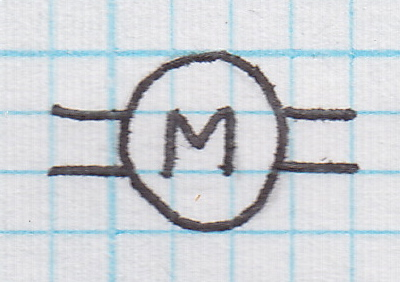
DC Motor

A DC motor has two leads and will spin when electricity passes between them. The direction of rotation is determined by the direction of the passing current. It is made of two stationary magnets and a commuter (a conductive element that rotates in a magnetic field when electricity is applied). The demonstrated link between electromagnetism and torque is called the Lorentz Force.